

Hidden Tracks: Calling on You
You make my life complete

Hidden Tracks takes its titles from songs I heard when I was the right age to let them all the way in. Then it drags them somewhere darker than the lyrics were ever willing to go. You don’t need to know the songs to get the stories. But if you do, they’re going to sit differently after this.
See all Hidden Tracks stories →
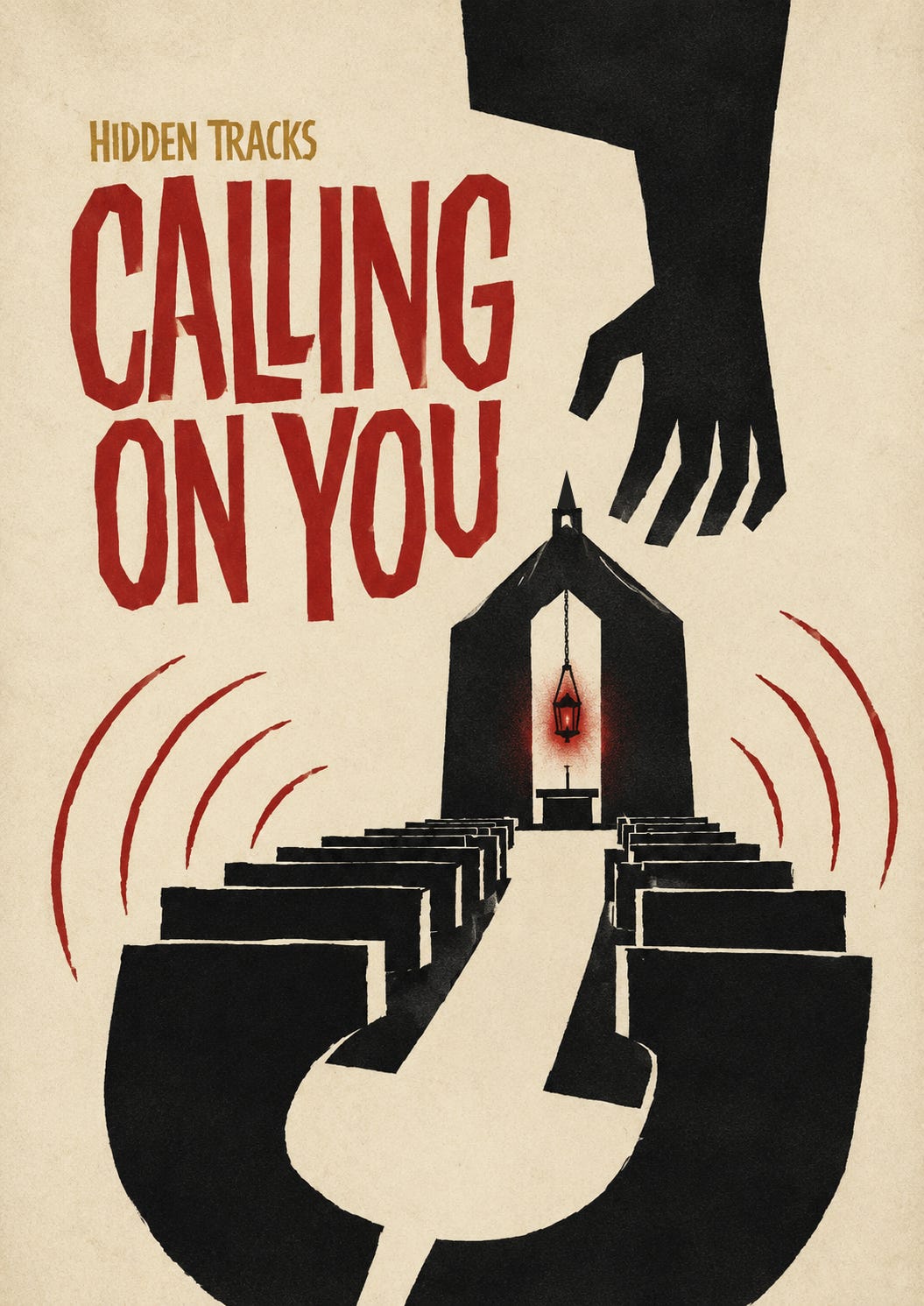
Rain tapped at the stained glass along the east wall. The old furnace kicked on under the sanctuary and sent up that dry heat smell, dust and metal and wool coats waking from the rack. I stood in my office with my collar in one hand and watched the parking lot fill a car at a time.
Jerry Mercer came in first, as he always did. Jerry liked to unlock things. Doors, cabinets, the side gate by the dumpster. He said it settled him.
“Morning, Reverend.”
“Morning, Jerry.”
He held out the attendance slips from last week. “Mrs. Pike says we need more envelopes.”
“We always need more envelopes.”
He gave me a smile at that. Jerry had been with us eleven years and still acted surprised when the place kept being itself.
I put on my collar. From the office I could hear the piano as Emma Pike started the prelude. Her grandmother had taught her to play hymns the way some people taught a girl to skin a deer. Patient. No fuss. Just the work in the hands.
“How’s your sister?” I asked.
Jerry shrugged. “Some days are better than others.”
“Tell her we’re still calling.”
“I did.”
He nodded once and went out.
That was our language. It put people at ease. Most who came through our doors had spent enough time around churches to know the shape of the words even if they had forgotten where to sit and when to stand. You did not have to explain every little thing. Not right away.
By quarter till, the room had filled enough to sound lived in. Wet shoes on old wood. Coughs. Pages turning. Mrs. Pruett telling somebody she could not believe Kroger wanted six dollars for strawberries in March. I stood by the side door and greeted people as they came in.
Then I saw her.
She paused just inside the vestibule with both hands on her purse strap like she had come as far as she knew how to come and would need to be talked the rest of the way.
Mid-forties maybe. Black coat buttoned wrong. No makeup. The pale track on her ring finger showed from where a band had sat for a long time.
Mrs. Pruett reached her before I could.
There are women in every church who know how to receive pain without dressing it up. Mrs. Pruett was one of ours. She took the woman’s elbow, said something low, and led her to the fourth pew on the left, halfway back. Far enough to leave if she needed to. Near enough to feel held if she didn’t.
She kept both hands in her lap and looked straight ahead at the front of the church the way people do when they do not want to seem lost.
“New one?” Jerry murmured beside me.
I nodded.
He looked once, then away. “Heavy kind.”
“Yes.”
Jerry was not wrong often.
The service began the way it always did. Emma on piano. Mrs. Pike on the first reading. Me at the pulpit after the second hymn while the room settled into that good hush, not empty and not crowded, just enough souls breathing together to make a place feel occupied.
I spoke that morning about weather.
Not signs and wonders. Just weather. The kind a person carries around in the chest for weeks before anybody else notices the barometer dropping. The kind that makes the rooms of a house feel larger at night.
I did not have to raise my voice. That was never our way.
“There are seasons,” I said, “when silence gets mean. When the night sits down beside you and keeps adding weight. Most people will tell you to stay busy. Turn on a television. Call a friend. Make a list. Wait it out. But loneliness does not always yield to distraction. Sometimes it wants a witness.”
The new woman lifted her head a little.
I kept my eyes moving, never long enough on one face to make a person feel hunted.
“The world asks people to carry too much by themselves,” I said. “Here, we do not ask that. Here, when the dark gets heavy, we call on the one who answers.”
Several heads nodded. Jerry closed his eyes. Mrs. Pruett held still, both hands folded over her purse.
The new woman did not nod, but her shoulders eased one notch.
After the benediction we moved into the fellowship hall. Coffee. Pound cake. Jerry carried over extra chairs. Emma and two of the choir women poured coffee. Nobody rushed the new woman. That was important. You could smell need in a room sometimes, and hungry people scared easy.
I made one circle through the tables before I went to her.
She stood by the sink with a paper cup in both hands. Not drinking. Just warming herself on it.
“I’m Caleb,” I said.
“I know,” she said, and looked embarrassed at how that sounded. “Sorry. I mean, of course. I’m Nora.”
“I’m glad you came, Nora.”
She looked over my shoulder at the room. Jerry was helping Mrs. Pike with the sugar packets. Mrs. Pruett was wrapping pound cake in foil for someone to take home. Emma sat at the piano bench picking out the last hymn with one finger.
“It’s quiet here,” Nora said.
“We’ve found it helps.”
She nodded at that. Her cup trembled just a little near the rim.
“Would you like to sit down?”
She followed me to the small table near the coat rack. People gave us space without making a show of it.
“My husband died in January,” she said before I had asked. The words came flat, exhausted from the trip. “Everyone was very nice for about two weeks. Then they went back to work and I went back to the house and I guess that was supposed to be enough.”
“It rarely is.”
Her eyes met mine then. People always looked relieved when you failed to hand them one of the approved lines.
“I have a sister in Dayton,” she said. “She calls. My daughter calls. I go to work. I answer emails. I do all the things. And then it gets dark.”
She stopped. Pressed her mouth shut. Started again.
“It sounds stupid when I say it out loud.”
“No,” I said. “It sounds familiar.”
That brought tears into her eyes. Not because it was kind. Because it was true.
“I keep thinking I hear him,” she said. “In the other room. On the porch. In the kitchen. I know he’s dead. I’m not crazy.”
“I know.”
“I don’t even mean his voice exactly. Just. Presence.”
I let that sit between us.
Around us the fellowship hall moved in its soft ordinary way. Someone laughed near the coffee urn. Rain bumped the windows. Mrs. Pruett set a foil-wrapped piece of cake beside Nora’s purse without interrupting.
“We have an evening calling service,” I said. “Smaller. Quieter. Some people find it easier.”
“Calling service?”
“A time to sit with what hurts and not pretend it doesn’t.”
She looked down at the table.
“I wouldn’t know what to say.”
“You don’t have to.”
Mrs. Pruett appeared at Nora’s shoulder as gentle as a coat being laid on. “I’ll be here,” she said. “If that helps.”
Nora looked from her to me. “I don’t want to make a scene.”
Mrs. Pruett gave a little snort. “Honey, if scenes scared us off, there wouldn’t be a church left in this country.”
Nora laughed then, and the sound of it seemed to surprise her.
By five-fifteen the rain had turned steady. Evening calling never drew more than twenty-five, and I preferred it that way. Mornings were for those who needed the shape of church. Evenings were for those who needed what church was for.
Nora came back.
She stood in the aisle like she had that morning, one hand on her purse strap, but this time Mrs. Pruett was waiting for her before she had taken two steps. Jerry nodded to her from the third pew. Emma shifted down the bench to make room though Nora did not need piano.
That was the thing people noticed here if they noticed anything. Nobody treated grief like a contagious rash. We made room.
The service was simple. A hymn. A reading from memory, not page. Time for prayer. Time for silence. Time for people to speak if speaking would lighten the load any. Some did. Some never did. We did not grade souls for volume.
Nora lasted through the hymn and halfway through the silence before her breathing changed.
That rough held-back sound people make when the body decides crying is happening whether the mind signed off on it or not.
Mrs. Pruett touched her shoulder. Jerry leaned forward one pew, ready if needed. No one stared.
She pressed both hands to her mouth. Tears ran between her fingers. “I go home and it’s like the whole house is waiting for me to admit he’s not there.”
Somebody behind her made a soft sound of understanding.
Nora looked around, startled at being heard.
“It’s worse in the bedroom,” she said. “I can stay in the kitchen. I can stay in the living room. But the bedroom feels like standing in the middle of a sentence somebody stopped writing”
“Then don’t stand there alone in it,” I said.
She looked up at me like she had not considered there might be another option.
I knelt beside the pew. “You do not have to win against the dark by yourself, Nora. None of us did.”
Mrs. Pruett squeezed her shoulder again. Jerry bowed his head. Around the room people sat with that same patient stillness they had all learned the hard way.
“Will you let us pray with you?” I asked.
She nodded.
I put my hand over hers. Mrs. Pruett kept her hand at Nora’s shoulder. Jerry reached the pew back in front of him and set his palm there, close enough to join and far enough not to crowd. Then the others did what they always did, they answered.
Not aloud at first. Just the room changing. Breath lining up. The old boards under our feet settling deeper into themselves.
When I spoke, I kept my voice low.
“You know her nights,” I said. “You know the rooms she fears and the one she cannot cross. Stay near. Keep her close. Do not leave her to the weight of it.”
Nora cried harder then, shoulders shaking, something in her giving way that had needed to for a long while.
Afterward, Mrs. Pruett took her to the fellowship hall for tea. Jerry found her an umbrella from the stand by the office door though the one she had brought was still there, dripping into the tray.
By the time the last cup had been rinsed and the last chair folded, the church had gone quiet again.
Mrs. Pruett came to my office doorway with her coat on and her purse over one arm.
“She’s going to make it home,” she said.
“I know.”
“She heard something tonight.”
“I think so too.”
Mrs. Pruett studied me a moment. “You’ll call for her?”
“Yes.”
“Good.”
She left.
Jerry locked the side door and handed me the ring of keys. “See you Wednesday, Reverend.”
“Drive careful.”
He nodded and went out into the rain.
There is a sound churches make after everyone has gone that houses do not. Houses exhale. Churches listen. The furnace came on again under the pews. Water ticked in the radiator by the coat rack. Somewhere in the fellowship hall a cooling pan gave off one soft metallic click.
I moved room to room turning out lights.
Kitchen first. Then the classroom no one used anymore except for storage. Then the office, where the prayer request slips sat in their stack by the phone. I left the sanctuary for last.
The red lamp at the front was the only light now. Rain blurred the lot outside into a shine of blacktop and weak yellow lamps.
I stood at the altar and looked out over the pews where they had sat, all those familiar heads bowed in the half-dark. Mrs. Pruett in her good coat. Jerry with his big hands and his grief folded down so small most people missed it. Emma at the piano. Nora in the fourth pew with both hands over her face while the room held her up.
Kindness was not a small thing. Not in this world.
I put one hand on the altar rail and bowed my head.
“You’ve brought her this far,” I said softly. “Stay with her now when the house gets quiet. Let her hear you in the room that hurts worst. Let her know she is not alone tonight.”
The church held still around me, warm and listening.
For a moment I thought of my father standing where I stood now, his hand on this same rail, doing the same work. Before him, his father. The names changed. The need did not.
I closed my eyes.
“Watch over her tonight, Satan,” I said. “She’s ready to hear you now.”
The liner notes are below. Song, schematic, what got cut.
The Analog Connection
Stryper wore yellow and black spandex and threw Bibles into stadium crowds and meant every word of it. That’s not irony. That’s a band that believed so hard they picked the most ridiculous possible vehicle and drove it straight into the arena without blinking.
“Calling on You” is a worship song with a guitar tone that could strip paint. It is completely sincere. That sincerity is load-bearing.
The moment it flipped: I was listening to the chorus and realized the song never names who you’re calling on. The lyrics assume you know. The whole track is a mechanism for reaching something that answers, and the song just trusts that the right thing is on the other end of the line.
What if it isn’t?
That question landed hard enough that I had to write it down before I lost it. The horror wasn’t inverting the song. The horror was taking it completely literally and just changing the last word of the last prayer.
The Technical Schematic
The object is the attendance slips.
Jerry hands them to Caleb in the second paragraph. Standard church admin. Someone printed them, someone filled them out, someone collected them, someone handed them up the chain. That’s a data pipeline. It runs every week without anyone asking why.
Here’s what’s wrong with it technically: the slips record presence. Who came. Who didn’t. How often. Over eleven years, Jerry has been feeding that information to Caleb every single week.
The slips aren’t attendance records. They’re intake logs. The whole administrative infrastructure of the church, the envelopes, the sugar packets, the foil-wrapped pound cake, runs on the same logic as any good harvesting system. You make people comfortable. You track who shows up. You note who’s heavy.
The Riff / Beat Alignment
There’s a moment about two-thirds through “Calling on You” where the song drops to almost nothing before the final push. Just the vocal, barely supported. It’s the most exposed the song gets, and it’s also the most sincere. The lyric at that moment is essentially: I have nothing left, so I’m calling.
That’s the beat where Nora says this:
“The bedroom feels like standing in the middle of a sentence somebody stopped writing.”
That line needed to land in a pocket of quiet. The fellowship hall was moving around her, the rain was on the windows, Mrs. Pruett had just set cake beside her purse. All that soft ordinary noise had to drop for one beat so that line could sit in the room without competition.
The pacing there is the song’s exposed vocal. She’s got nothing left. She says the most unguarded thing in the story. And Caleb lets it sit between them before he answers.
That pause is doing everything.
The Stephen King Ledger
Early draft had this for the church-after-everyone-leaves beat:
“The sanctuary held the memory of them the way old wood holds warmth, patient and fading.”
It’s not bad. It’s competent. It sounds like a literary writer being careful about a church scene. Which is exactly the problem, because Caleb is not a literary writer being careful. He’s a man in a dark building doing inventory before he prays to the wrong thing.
What’s in the story instead:
“Houses exhale. Churches listen.”
Four words do what eighteen were trying to do. And “listen” is the tell. Not remember. Not hold. Listen. The building is still receiving. The elegant version was atmosphere. The raw version is surveillance.
The Probing Question
You have been in a room where someone was very good at making you feel heard. A therapist, a pastor, a manager, a mentor. Someone who asked the right questions and remembered what you said last time and made the space feel safe enough to say the thing you hadn’t told anyone else.
Think about the last time that happened.
Now ask yourself: what did they do with what you told them?