
Hidden Tracks: 18 and Life
Your crime is time.

Hidden Tracks takes its titles from songs I heard when I was the right age to let them all the way in. Then it drags them somewhere darker than the lyrics were ever willing to go. You don’t need to know the songs to get the stories. But if you do, they’re going to sit differently after this.
See all Hidden Tracks stories →
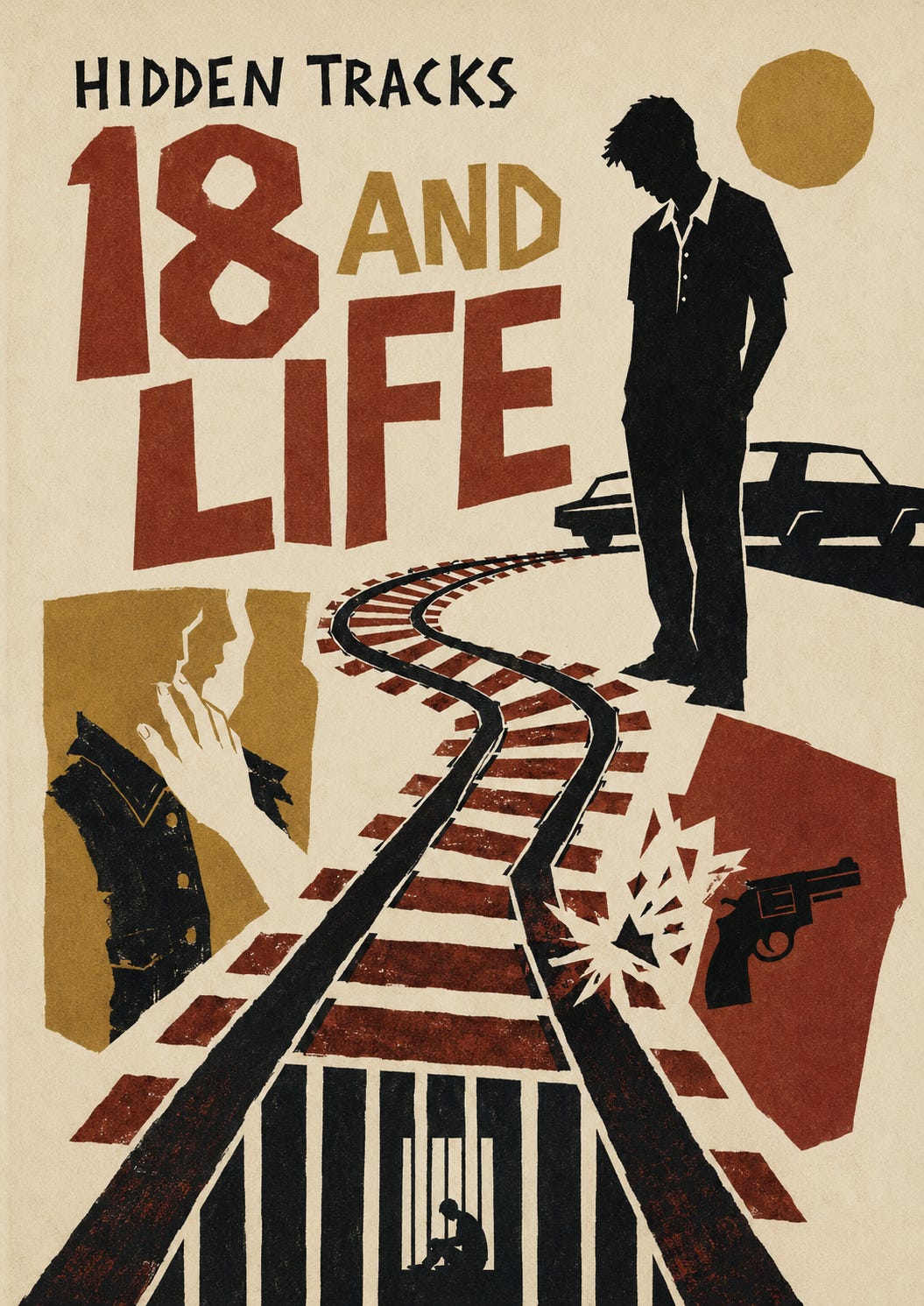
The heat in Clermont County sat on you like a fat man with a grudge. It was 1989. The air tasted like lead paint and the scorched hair of a dozen local transformers that had given up the ghost by noon.
Tommy didn’t mind. He was seventeen, and for the last six months his body had been playing a radio station that didn’t exist. He felt it in his marrow.
“She tell you?” Ricky said.
Ricky stood by the rusted-out shell of an El Camino with the passenger door hanging open. He was eighteen, wearing a cheap, starch-stiff button-down, collar a half-inch too small, the skin of his neck pinched into a red ridge. He’d been wearing it three days running.
“Why do you think I’m here, Rick?” Tommy asked.
“Don’t.” Ricky’s jaw worked. He looked at the tracks, not at Tommy. “I seen you two. Behind the SuperAmerica.”
“Rick…”
“I seen you.”
The tracks at the edge of town didn’t go anywhere. They looped back toward the textile mill, a shimmering circle of heat and rusted iron that went nowhere.
Tommy stepped onto the gravel. “You didn’t see what you think you saw.”
“Stop talking.” Ricky leaned in through the open door and popped the glove box. The .38 came out heavy and slow, like he was lifting something he hadn’t decided to lift yet. “I just want you to stop talking for once.”
“Put that down.”
“She was crying, Tom.” His voice cracked on it. “You want to tell me what that was?”
Tommy was quiet a beat too long.
“Rick, there’s something I’ve been trying to tell you. For a while now.” He took a step forward. “About me. Not Sarah. About me.”
Ricky’s hand tightened on the grip. “Don’t.”
“Just listen…”
“I said don’t.” The gun came up.
For a second the barrel wobbled. It dipped toward the gravel like his wrist got tired of lying. Then it steadied again, higher, back where it could do its job.
“I don’t want to hear it,” Ricky said. “I don’t want to hear whatever you’re about to say.”
His throat jumped hard. He swallowed like it hurt. He kept his eyes on the tracks because the tracks didn’t ask anything from him. Tommy did.
It was easier to be angry. Anger had a shape. You could hold it. The other thing made his hands feel empty.
Tommy took one more step and raised his hand and put it against Ricky’s face. Not grabbing. Just there.
Ricky jerked at first.
Then he didn’t.
His eyes shut for a beat. His jaw worked like he was trying to chew a word down to nothing.
“Don’t,” he said, and it came out small. “Not out loud.”
Tommy’s thumb moved once, gentle, like he was checking if Ricky was still in there.
The shot sounded like a dry branch snapping in a winter forest.
Tommy didn’t fall right away. He looked down at his denim vest. A dark bloom spread across the fabric.
“Rick.”
Ricky dropped the gun. His legs went and he caught himself on the hood of the El Camino, hands flat on the hot metal.
Tommy sat down in the gravel. He didn’t say anything else.
The cell smelled of floor wax and old sweat. Six months in and Ricky had stopped counting the days, which was its own kind of counting.
He lay on his cot staring at the ceiling. Somewhere down the block a radio was playing, tinny and distant, and without meaning to he started humming along. Youth Gone Wild. The words didn’t come out. Just the melody, low in his throat, the way they used to do it in the back of somebody’s car with the windows down. Him and Tommy and Sarah, none of them able to carry a tune.
He stopped humming.
He’d been thinking about the SuperAmerica station. Turning it over the way you turn a stone over, not because you want to see what’s under it. Sarah had been crying. He’d had it right there, the whole thing, if he’d just let himself look at it straight. She wasn’t crying because of Tommy. She was crying for him. She already knew what Tommy had been trying to work up the nerve to say.
There’s something I’ve been trying to tell you.
Ricky put his arm over his eyes.
He’d kept the gun up and told Tommy to stop talking and Tommy, who never listened to anybody, had listened to him. One time. That one time.
He started humming again without noticing.
The radio down the cell block played on.
The liner notes are below. Song, schematic, what got cut. Paid subscribers only.
01 — The analog connection
The only language available
“18 and Life” is about a kid who pulls a trigger because nobody ever handed him a different way to exist.
Ricky’s got a date with the law and it’s all he’s got. Sebastian Bach doesn’t editorialize. He just tells you what happened, in order, and lets the accumulation do the work. The kid had nothing. He used what he had. The song doesn’t forgive him. It doesn’t condemn him either. It just stays in the room with him after.
What the song doesn’t say out loud, and what this story doesn’t say out loud either, is what Tommy was about to tell him. “There’s something I’ve been trying to tell you. About me. Not Sarah. About me.” In 1989 Clermont County that sentence has one ending. Ricky already knew it. That’s why he told Tommy to stop. Not because he didn’t understand. Because he did, and understanding it out loud was something he didn’t have the language to survive.
Tommy was gay. The story never uses the word. The liner notes can.
The song clicked in on the collar. Ricky’s button-down, starch-stiff, half an inch too small, the skin of his neck pinched into a red ridge. He’d been wearing it three days running. That detail is the whole song in an image. Something that was supposed to fit, worn past the point of comfort, held on because letting go means admitting something. Ricky is doing that with everything in the scene. The collar. The anger. The gun. The word “don’t.” All of it worn too tight and held on too long.
02 — The technical schematic
The barrel wobble
A .38 revolver weighs about thirty ounces unloaded. Loaded, closer to thirty-five. That’s not heavy for a gun. It’s heavy for a hand that hasn’t decided what it’s doing yet.
The barrel dips toward the gravel. Not because Ricky’s weak. Because his wrist got tired of lying before the rest of him did. The body knows before the decision is made. For one second the gun is pointed at the ground and nobody is dead and the whole thing could go somewhere else.
Then it steadies. Higher. Back where it can do its job.
That wobble is the hinge the story turns on. Everything before it is buildup. Everything after it is consequence. The gun didn’t malfunction. The grip didn’t slip. Ricky’s hand simply showed him what it was thinking and then changed its mind, and the story never explains which part of him won. It just shows you the barrel going back up. The schematic here isn’t the weapon. It’s the two seconds of mechanical hesitation that prove the decision wasn’t inevitable right up until it was.
03 — Riff/beat alignment
The held note before the final chorus and the cell block radio
Bach holds a long note before the final chorus comes back in. The band drops under him and he just stays there, suspended, before everything crashes back at full weight. It’s the sound of something being carried that can’t be put down.
“Somewhere down the block a radio was playing, tinny and distant, and without meaning to he started humming along. Youth Gone Wild. The words didn’t come out. Just the melody, low in his throat, the way they used to do it in the back of somebody’s car with the windows down.”
The cell scene is the story holding that note. Ricky humming without words. The melody still there, the language gone, because the language belonged to the three of them and now there are only two. He stops humming when he gets close to it. Then starts again without noticing, because you can suppress the words but the tune keeps running anyway.
I almost cut the second hum. The one at the end, after he puts his arm over his eyes. It felt like repetition. It isn’t. The first time he stops on purpose. The second time he doesn’t notice until it’s already happening. That’s the difference between grief you’re managing and grief that’s managing you. The held note needed to stay in twice.
04 — The Stephen King ledger
The thumb
Version I killed
“Tommy’s thumb moved against Ricky’s cheek, slow and careful, the way you’d touch something you were afraid of breaking, or something you’d already broken and were trying to remember whole.”
Version I kept
“Tommy’s thumb moved once, gentle, like he was checking if Ricky was still in there.”
The first version is me deciding what the gesture means on the reader’s behalf. “Something you’d already broken and were trying to remember whole” is a complete emotional interpretation handed over in gift wrap. Tommy doesn’t think in those terms. Tommy is seventeen and scared and standing in front of a gun and doing the only thing he knows how to do with his hands, which is reach for the person in front of him and check whether they’re still there. One motion. One question. That’s it. The simpler version trusts that if you’ve been in the scene for the whole scene, you already know what the thumb means. You don’t need the receipt.
05 — For paid subscribers
Think about a conversation you didn’t have because you didn’t have the words for it yet, or because the other person told you to stop before you got there. Not the dramatic version. The quiet one. The thing you were working up to that never got said because the moment closed before you could find the language. Now think about what it would have cost the other person to hear it, and whether that cost is why the moment closed when it did.

Loved this!
A very visceral piece, and what a story! Also, remembering this song took me back to my youth in a wonderful way.