
Eaters
In Oakhaven, presentation is everything.

The first thing Ben noticed was the silence.
He lived in Chicago for ten years. Trash day there was a combat sport. Metal slamming on asphalt. Hydraulics screaming at 5:00 AM. Guys shouting about the Cubs. You knew when they came.
Here in Oakhaven Tuesday mornings were dead quiet.
Ben woke up at five. Made coffee. Looked out the window.
The bins were empty. Lids closed. Standing in perfect rows at the end of every driveway.
He never heard a truck. No engine rumble. No backup beeps. Nothing.
“They’re efficient,” his neighbor Mr. Lutz told him over the fence. Lutz was sixty. Wore cardigans in July. Kept his lawn trimmed to the millimeter. “Very punctual.”
“Who is it?” Ben asked. “Waste Management? Republic?”
Lutz stopped trimming his hedge. He looked at Ben’s bin. It was overflowing. Pizza boxes. Styrofoam. Beer bottles.
“You should rinse those,” Lutz said.
“It’s trash, Mr. Lutz. It’s just going to a landfill.”
“It’s going to their collection,” he said. He didn’t look at Ben. He looked at the grease stain on the pizza box. “They don’t like grease. It’s disrespectful.”
“Disrespectful to the garbage men?”
Lutz turned back to his hedge. “Just rinse them. Tie the bags tight. Present it well.”
“Present it?”
“Tuesday is coming,” Lutz said. “Don’t be messy.”
Ben decided Lutz was just a suburban control freak. The kind of guy who measures grass height with a ruler.
Then he saw Mrs. Higgins.
She lived across the street. Eighty years old. Walked with a cane.
Monday night Ben took out his kitchen bag. He saw her in her garage. The door was open. The light was on.
She was standing at a workbench. She had a rotisserie chicken carcass. The plastic container from the grocery store.
She wasn’t throwing it away.
She was arranging it.
She placed the bones in the center of the plastic tray. Stacked them. Leg bones crossed. Rib cage centered. She took the skin, the greasy flabby parts most people toss and draped it over the bones like a tablecloth.
Then she took a sprig of parsley from a jar and placed it on top.
She stepped back. Nodded.
She slid the tray into a white garbage bag. Tied it with a red ribbon. Not a twist tie. A ribbon.
She carried it to the curb like it was a wedding gift.
Ben looked at his own bin. A torn bag. Coffee grounds leaking out the bottom. A milk jug crushing a cereal box.
He watched Mrs. Higgins pat the lid of her bin. Three times. Gentle.
“Bon Appétit!” she said.
He didn’t sleep that night.
He sat in the living room with the lights off. Watching the street. Waiting for the truck. He wanted to see the crew that demanded parsley on their trash.
2:00 AM. Nothing.
3:00 AM. The streetlights buzzed. A cat ran across the road. Froze. Ears flat. Bolted under a porch.
3:14 AM.
Movement, but not a truck. No headlights.
Just shadows.
They came from the north end of the street. Where the woods border the cul-de-sac.
Three of them. Maybe four.
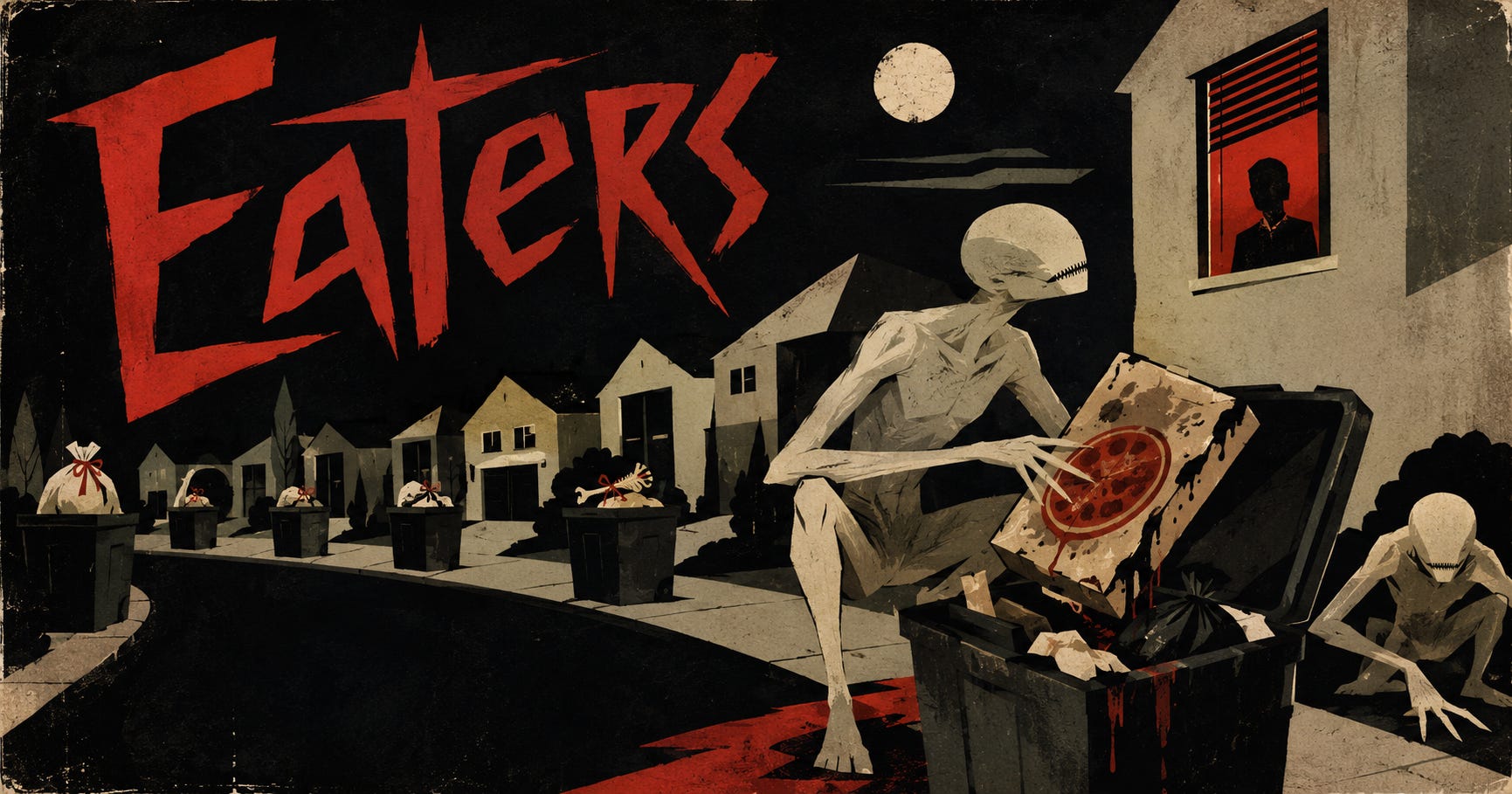
They moved on two legs but leaned forward in a loping crouch that dragged their knuckles against the pavement. They were impossibly thin, naked and pale grey against the black asphalt, like skin pulled too tight over a frame that had too many angles.
They didn’t make a sound. No footsteps. Their feet were padded and wide.
They stopped at the first house. The Millers’.
One of them reached for the bin.
It didn’t lift it. It didn’t dump it.
It opened the lid with delicate, deliberate movements, long fingers unlocking the latch like a thief cracking a safe.
It reached inside. Pulled out a white bag.
The creature held the bag up to the streetlight. Inspecting it. It sniffed. A long wet sound.
Then it tore the bag open.
It didn’t scatter the trash. It didn’t make a mess.
It lifted a bundle of steak bones tied with twine and slid the whole mass into its mouth.
It chewed.
Crunch.
Loud. Wet.
The other two gathered around. They took turns. Picking items out of the bin. A bundle of vegetable peelings. A stack of stale bread.
They ate everything. The plastic. The bones. The bag.
Then they licked the inside of the bin. Tongues like dark ribbons cleaning the plastic until it shone.
They closed the lid. Moved to the next house.
Mr. Lutz’s house.
They opened his bin. Pulled out a bag. One of them made a low chittering sound. Appreciation. Lutz had left them something good.
They ate it standing up. Civilized.
They were getting closer.
Ben’s house was next.
He looked at his bin through the window. The overflowing lid. The pizza grease. The unrinsed milk jug.
He looked at the creatures.
They were ten feet away. He could see their faces now.
No eyes. Just smooth grey skin. The mouth split the jawline. Rows of flat grinding teeth. Ceramic white.
They stepped onto his driveway.
One of them sniffed the air. It stopped.
It turned its head toward the bin.
It hissed. A sound like steam escaping a pipe.
It reached out and flipped the lid open.
The creature recoiled.
It reached in. Grabbed the pizza box. The one with the grease stain.
It held it up. Sniffed it.
Then it threw it on the ground.
It shrieked. A sound that wasn’t animal. High. Ragged. The noise something makes when it’s been cheated.
Smooth grey faces tilted up. Toward Ben’s window.
The creature on the driveway kicked the bin. Pizza boxes slid across the asphalt. It pointed at the grease. It pointed at Ben. Then it started walking toward the front door.
THE END
Like this story?
It’s part of my short story collection, Farrago: Volume 1. Purchase the twenty-two story collection here:


Miles this was delightful in the very best way. So glad my trash day was yesterday or I might be outside rearranging the trash.
Man, I also wouldn’t sleep after seeing someone arrange a chicken carcass like that’s